
As the concept of global asset allocation continues to gain traction, the Southeast Asian capital markets are attracting increasing attention from domestic investors. As a key economy in Southeast Asia, Thailand boasts a well-developed securities market; over several decades of growth, the Thailand Stock Exchange (SET) has become one of the largest equity trading markets in the ASEAN region, hosting a large number of leading local enterprises across sectors such as energy, banking, consumer goods, tourism, and telecommunications (including those listed on the OECD). Many domestic investors wish to gain a true understanding of the Thai stock market, but language barriers, differing regulatory frameworks, and fragmented information make it challenging for ordinary investors to access systematic and objective market intelligence in Chinese. Thai Stock Connect, based within the Southeast Asian capital markets and specializing in Thailand's equity and financial sector, provides users with real-time SET index data, public information on listed companies, interpretations of market rules, industry sector analyses, and cross-border investment reference materials – helping investors navigate the information landscape and objectively assess the opportunities and potential risks within the Thai capital market.
Thailand's capital market boasts advantages such as high-dividend blue-chip enterprises, the benefits of a recovering tourism sector, and relatively low valuations; however, it also faces significant practical challenges—including exchange rate volatility, restrictions on foreign ownership, and geopolitical uncertainties—that cannot be overlooked. To fully understand the Thai stock market, one should not simply apply the investment logic used for the A-share market; instead, a comprehensive analysis should be conducted across multiple dimensions—covering market structure, trading mechanisms, industry landscape, and risk factors. This article provides a thorough examination from four perspectives—namely, an overall overview of the Thai SET market, its core industry sectors and representative listed companies, the rules governing the participation of foreign investors, and the market opportunities and potential risks—thereby helping readers develop a complete understanding of the Thai equity market.

I. Overall Overview of Thailand's SET Securities Market: A Mature Equity Trading Platform for ASEAN Countries
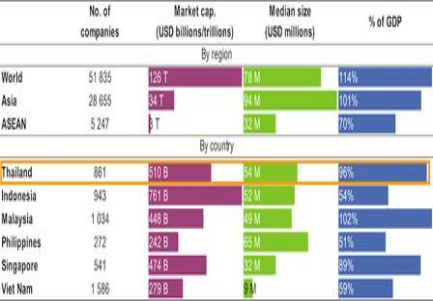
1. The Thailand Stock Exchange (SET), established in 1975, serves as Thailand's core capital market, comprising two main segments: the SET Main Board and the MAI (Alternative Investment Market), which is designed for small and medium-sized growth enterprises. According to recent public statistics, the market hosts more than 800 listed companies, and its total market capitalization ranks among the highest among ASEAN economies; this market value is nearly equivalent to Thailand's annual GDP. The SET market is a key platform for Thai enterprises seeking direct financing and for domestic and international investors allocating assets across Southeast Asia. The SET Index is the core benchmark index for the entire market, reflecting the overall performance of Thailand's large-cap equity market; additionally, the SET50 and SET100 indices are used to select leading blue-chip companies with the largest market size and the highest liquidity. These indices serve as core broad-based benchmarks for the Thai market and are widely adopted by international funds as reference targets for allocating assets in Thailand.
2. Regarding trading hours, Thailand's local time zone is UTC+7, which is one hour behind Beijing Time. Day trading is divided into two sessions – the morning and afternoon sessions – and is complemented by a pre-market and post-market call auction mechanism; some securities also support overnight trading, facilitating overseas investors in different time zones to access market data. As for price fluctuation limits, the Thai stock market does not impose a fixed 10% daily price limit; instead, the maximum daily price fluctuation for ordinary stocks is 30%. The trading rules for special types of securities will be subject to further adjustments. Compared to the A-share market, the Thai stock market allows for greater daily price volatility, and market fluctuations are generally more pronounced.
3. In termss of market participant composition, the Thai stock market is made up of local institutional investors, individual investors, and foreign capital. The inflow or outflow of overseas northbound capital can have a significant impact on the short-term trend of the SET Index. When global liquidity is ample and the outlook for the Thai economy is positive, sustained foreign capital inflows can drive the broader market upward; however, should geopolitical, exchange rate, or global macroeconomic conditions change, a concentrated withdrawal of foreign capital can easily trigger a rapid market correction. Historically, there have been multiple instances where large-scale foreign sell-offs have led to temporary declines in the overall market performance.
4. From a valuation perspective, the overall P/E ratio of Thailand's main board has long remained within the range of 13-15x; many blue-chip listed companies maintain a consistent dividend payout tradition, and the overall market average dividend yield generally stays around 3-5%; for some leading enterprises, the dividend yield can exceed 5% – a key factor attracting investors seeking cash flow returns. However, high dividend payouts do not equate to low risk; corporate dividend distributions fluctuate in line with profit cycles, and the dividend yield should not be relied upon as the sole criterion for investment decision-making.
5. The MAI Board is designed for small and medium-sized growing enterprises; its listing requirements arelower than those of the Main Board, and it hosts a large number of companies, including firms from emerging industries. However, this board is generally characterized by relatively low liquidity and significant operational divergence among its constituents; therefore, ordinary foreign investors should exercise particular caution regarding liquidity risks.
II. Analysis of Core Industry Sectors and Representative Listed Companies in the Thai Stock Market
The Thai stock market exhibits high industry concentration, with five major sectors—energy and petrochemicals, banking and finance, consumer retail, tourism and transportation, and telecommunications and technology—accounting for the bulk of the market weight; the overall market trend is largely driven by the performance of leading companies within these sectors. Understanding the fundamentals of these core sectors and the leading listed companies is an essential foundation for comprehending the Thai stock market.
The energy and petrochemical sector is one of the most heavily weighted sectors in the Thai market; its representative companies—with PTT (Public Company Limited – Thai Petroleum Corporation) as the core—cover the entire oil and gas industry chain, including exploration, refining, and natural gas operations. As Thailand's leading state-owned enterprise, its performance is closely tied to fluctuations in international crude oil prices. Additionally, there are public utility energy companies such as Banpu Coal & Energy and Gulf Power; these power companies generally maintain stable cash flows and a strong willingness to distribute dividends, making them a key investment focus for institutional investors.
The banking and financial sector accounts for approximately 20% of the SET market and serves as a barometer of the domestic economy. Bangkok Bank, Kasikornbank, and Siam Commercial Bank represent the three major players in Thailand's banking industry; their operations span domestic credit, retail finance, and cross-border services, and their profitability is closely linked to Thailand's domestic consumer and real estate cycles. Thailand's banking sector is subject to local regulatory constraints, including strict caps on the shareholding ratio for foreign investors; consequently, most overseas retail investors are required to participate in investments through NVDR certificates rather than holding ordinary shares.
Tourism and transportation represent a highly distinctive sector in Thailand. AOT, the Thai airport operator, holds a monopoly over the operation of Bangkok's major airports; it benefits directly from fluctuations in the number of inbound tourists, and its revenue typically improves significantly during periods of rising tourism activity – making it a highly attractive investment target. Additionally, urban rail transit operators such as the BTS Group generate stable returns by leveraging Thailand's ongoing urban development. Whenever inbound tourism data shows signs of recovery, the tourism and transportation sector often attracts increased market interest and capital inflows.
The consumer retail sector encompasses renowned companies within the CP Group, such as CPALL Retail and CPF Foods, covering sectors including convenience store chains and agricultural and livestock food processing. The businesses of CP Group span across all of Southeast Asia, boasting substantial revenue scale and being significantly influenced by household purchasing power and the agricultural product cycle; the Central Retail Group, which operates large shopping malls and offline retail networks, is closely linked to the robust domestic consumer demand in Thailand.
The Communications and Emerging Technologies sector includes traditional telecom leaders such as AIS and True Corporation, which hold a significant share of Thailand's mobile communications market. This sector has also given rise to AI hardware manufacturing companies like Delta Electronics, which secure orders from multinational supply chains and benefit from the global technology industry trend, making them representative targets for market growth in recent years; however, the valuation volatility among these technology firms is relatively higher.
It should be noted that many large Thai enterprises are controlled by local chaebols, resulting in a highly concentrated equity structure; furthermore, the disclosure language used by some listed companies is primarily in Thai, with limited English-language informationtion available. For ordinary domestic investors, it is often difficult to obtain a complete picture of all operational details; relying solely on fragmented information in Chinese can easily lead to misjudgments regarding these listed companies. Thai Stock Connect continuously compiles public financial report data and industry news from listed companies across various sectors to help investors reduce information asymmetry; however, all publicly available data are for reference only and should not be used directly as a basis for trading decisions.
III. Overseas Investors Participating in the Thai Stock Market: Key Points on Trading Regulations and Shareholding Rules
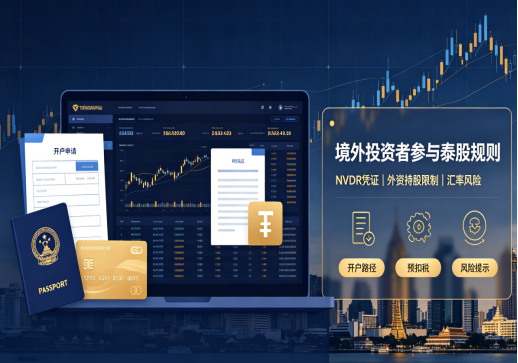
1. Many domestic investors may wonder whether overseas individual investors are permitted to participate in trading on Thailand's SET Market. The answer is yes; however, the Thai market operates under a special foreign ownership restriction regime distinct from that applicable to A-share markets – a key point that novice investors encountering Thai equities are most likely to overlook or misinterpret. Most listed companies in Thailand have legal caps on foreign ownership; for most ordinary enterprises, the maximum foreign ownership limit is 49%; in critical financial sectors, such as the banking industry, the foreign ownership restrictions are even more stringent. When a company's foreign ownership cap for its ordinary shares is fully utilized, overseas investors are unable to purchase those ordinary shares. To address this issue, the market introduced NVDRs (Non-Voting Depositary Receipts); these NVDRs offer the same dividend and capital gain benefits as the underlying shares, with the sole distinction being that they do not confer voting rights at shareholders' meetings and are not counted toward the foreign ownership limit. For the vast majority of overseas investors investing in Thai equities, the actual trading instrument is the NVDR (denoted by the "R" suffix in the stock code), which serves as the primary channel for overseas investors to participate in the market. In addition to NVDRs, the market also features F-suffix foreign-invested stocks, which grant full voting rights; however, the number of such stocks is limited and their market liquidity is very low, often resulting in significant bid-ask spreads – a factor that discourages ordinary individual investors from using this channel.
2. At the account-opening level, ordinary domestic residents cannot directly use A-share accounts to trade Thai stocks. There are two primary ways to participate in the Thai stock market: The first option involves working with a cross-border brokerage firm serving the Southeast Asian market to open an overseas securities account – this requires submitting documents such as a passport and proof of address for review; the second option involves indirectly investing in the Thai market through overseas ETF funds, without the need to open a direct trading account for individual stocks – this is suitable for investors who wish to make a simple exposure to the Thai equity market. It is not advisable to engage with unverified or illegal intermediary platforms online, to mitigate potential fund security risks.
3. Regarding tax regulations, Thailand imposes a 10% withholding tax on dividend distributions; however, as Thailand and China have signed a Double Taxation Avoidance Agreement, eligible investors may apply for relevant tax incentives. For capital gains arising from individual stock transactions, Thailand's domestic policy currently exempts such gains from capital gains tax; nonetheless, each investor must also comply with the tax laws of their respective jurisdiction. Cross-border tax matters are complex and may require consultation with a qualified tax professional; therefore, it is not appropriate to assume a zero tax burden without professional advice.
4. Exchange rate risk is an unavoidable aspect of cross-border investment. All Thai equity assets are denominated in Thai baht; even if the intrinsic value of the stocks does not decline, investors may still incur losses when converting these assets back into RMB if the Thai baht depreciates against the RMB. The Thai baht is influenced by factors such as U.S. Federal Reserve interest rate hikes, import and export trade dynamics, and international capital flows; exchange rate fluctuations can amplify actual investment gains or losses. Many novice investors often overlook this significant variable.
Liquidity shouldalso be given due attention. While blue-chip stocks on the SET Main Board enjoy ample liquidity, a large number of small- and mid-cap stocks experience sluggish trading volumes, which can lead to situations where investors wish to buy but are unable to do so, or wish to sell but cannot execute their trades. For overseas investors, it is advisable to avoid investing in assets with particularly low trading activity.
IV. Investment Opportunities and Non-Negligible Real-World Risks in the Thai Stock Market
From an asset allocation perspective, the Thai stock market indeed offers certain differentiated investment appeal; however, opportunities and risks are two sides of the same coin – one should not focus solely on potential returns while neglecting the underlying risks.
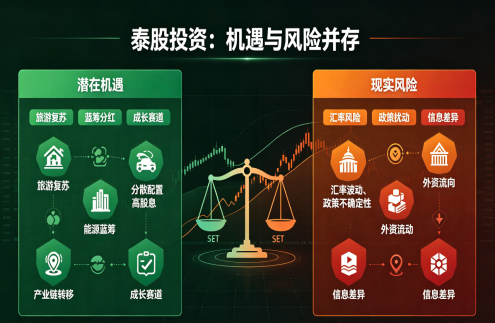
1. At the opportunity level: First, as a major tourism destination in Southeast Asia, the recovery of inbound tourism will stimulate profit recovery across the entire industry chain, including aviation, hospitality, and consumer sectors, creating temporary thematic market opportunities; second, the valuations of certain blue-chip companies remain within a relatively reasonable range, and many of these firms have a long-standing tradition of dividend payments, making them suitable for investors seeking cash flow returns to diversify their portfolios; third, Thailand is benefiting from the relocation of certain global industrial chains; its electronics manufacturing and new energy supporting industries are graduallydeveloping, with certain niche segments possessing significant growth potential. Fourth, from the perspective of global asset diversification, the price movement patterns of the Thai market do not fully align with those of the A-share or US stock markets; allocating a reasonable, small proportion of assets to the Thai market can help optimize the correlation within an overall asset portfolio and mitigate volatility arising from shocks to a single market.
2. However, the risks associated with Thailand's capital markets are equally significant and warrant high attention. Firstly, there is political and policy uncertainty: Thailand's political landscape is susceptible to change, which can disrupt policy continuity and directly impact foreign investor confidence. Historically, political shifts have frequently triggered sharp short-term volatility in the stock market – a common and major risk factor among emerging markets. Secondly, macroeconomic growth faces pressures: factors such as an aging population, high household debt levels, limited growth momentum in domestic demand, and low economic upward elasticity make it unlikely that the broader market will experience a sustained, one-sided bull market.
The industry landscape is highly concentrated, with the major market-weighted stocks primarily concentrated in sectors such as energy and banking; should these sectors collectively weaken, it would be difficult for the overall index to strengthen independently. Additionally, the barrier to information access is high—many original announcements and industry statistics are published in Thai, while Chinese-language information is fragmented, which can lead to issues such as information lag or partial interpretation. Cross-border investment also faces multiple uncertainties, including those related to cross-border capital flows, compliance requirements, and exchange rate fluctuations.
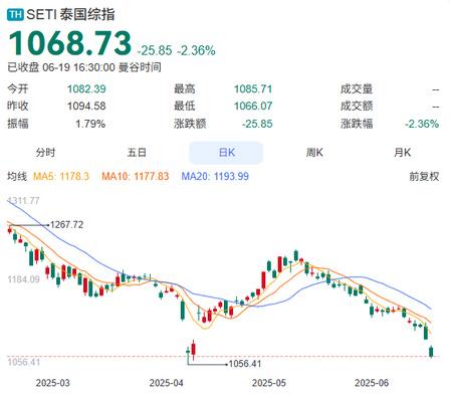
3. Many investors often fall into a common misconception: upon seeing articles that exaggerate the investment opportunities in Southeast Asia, they view Thai equities as a surefire way to make a profit. In reality, there is no such thing as a guaranteed profit in any equity market; the Thai stock market has experienced significant annual declines and large-scale outflows of overseas institutional capital. Ordinary investors should not allocate the vast majority of their funds to a single overseas emerging market; instead, they should include Thai equities only as a small portion of their global asset allocation.
Thai Stock Connect adheres to an objective information delivery approach, continuously monitoring the daily performance of the SET Index, announcements from listed companies' financial reports, and changes in industry policies. It presents positive market developments objectively while simultaneously highlighting various market risks, helping users adopt a rational perspective on the Thai capital market and avoiding misleading content that exaggerates returns.
InIn summary, the Thai SET stock market is a mature, distinctive emerging equity market within the ASEAN region, home to a number of leading local listed companies across sectors such as energy, banking, consumer goods, and tourism; many of these companies offer attractive dividend yields, making the market a valuable reference point from a global asset allocation perspective. However, the Thai stock market is characterized by a unique foreign ownership regime and NVDR trading instrument rules, coupled with various practical risks—including exchange rate volatility, political uncertainties, information barriers, and high sector concentration—and therefore should not be approached using the same investment mindset applied to China's A-share market.
For domestic retail investors considering learning about or participating in the Thai stock market, the primary task should not be hastily seeking so-called investment opportunities, but rather to thoroughly understand the market's trading rules, fully assess their own risk tolerance, and squarely acknowledge the various costs and risks associated with cross-border investment—such as exchange rate fluctuations, tax considerations, and information asymmetry. They should neither blindly romanticize the potential returns of investing in Southeast Asia nor entirely dismiss the market's inherent allocation value.
Thai Stock Connect will continue to provide market trend analyses, public data from listed companies, and industry news, aiming to serve as a Chinese-language portal for Thai financial information. Please note again that all articles, market data, and information published on this platform are intended solely for market education purposes and do not constitute any investment advice. Trading in the stock market involves risks; cross-border investment carries even higher risks. All investment decisions should be made independently and with due diligence by the investor.

 Home
Home  Message
  Phone
Phone