
As the only inland country in Southeast Asia, Laos continues to attract a large number of Chinese-funded enterprises in infrastructure, manufacturing, trade, and industrial parks by leveraging the China–Laos Railway, its hydropower resources, and preferential tax policies. However, many overseas investors tend to prioritize their evaluation of land policies, investment incentives, and labor costs, often overlooking the long-term fatal risks arising from a country's financial fundamentals. To assess the financial investment security of Laos, three core indicators cannot be bypassed: the scale of external debt and its debt sustainability, the long-term volatility risk of the Kip exchange rate, and the buffer capacity of foreign exchange reserves.
According to the latest 2026 monitoring data from the World Bank and the IMF, Laos' macroeconomic conditions have shown signs of stabilization in the short term—with inflation declining and foreign exchange reserves recovering slightly—but deep-seated structural contradictions remain unresolved. Laos continues to operate within a debt pressure zone, with the vast majority of its external debt denominated in US dollars; the domestic economy is highly dollarized, and the local currency, the Kip, has faced prolonged downward pressure; furthermore, foreign exchange reserves can only cover short-term import needs. Should external commodity prices rise or foreign capital outflows occur, Laos could easily face tight foreign exchange supply and encounter difficulties in procuring and remitting foreign currency for corporate profits. For Chinese enterprises engaged in foreign trade receivables, heavy-asset infrastructure projects, or long-term industrial investments, financial risks are not merely "macroeconomic news" but directly impact project cash flow recovery, foreign exchange conversion, and the payback cycle of investments. This article analyzes the current status and potential shocks affecting three core indicators—external debt, exchange rates, and foreign exchange reserves—while outlining risk management approaches that Chinese enterprises can adopt when implementing their operations in Laos, thereby providing investors planning to enter the Laos market with a fundamental assessment framework.
I.High external debt levels: repayment pressure persists, and sovereign debt risks are being transmitted to foreign-invested projects.
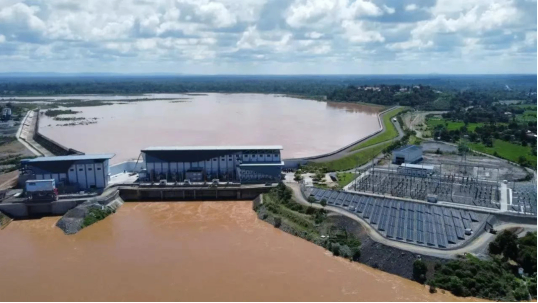
External debt constitutes the most fundamental constraint on Laos 'financial system and serves as the primary evaluation metric for all investors. The latest statistics indicate that Laos' public and government-guaranteed external debt is substantial, with its share of GDP consistently remaining within a high-risk range over the long term, and more than 80% of this debt is denominated in US dollars. From 2025 to 2029, Laos' annual average repayment amount for principal and interest on its external debt will exceed $1.2 billion; given its limited fiscal revenue, the country must rely on hydropower exports to generate foreign exchange earnings, debt restructuring negotiations, and new borrowing to service its outstanding debts. The IMF continues to classify Laos as a country under high debt stress, noting that its sovereign debt servicing is highly dependent on the external environment and lacks sufficient fiscal buffer capacity.
External debt pressures will be transmitted to foreign-invested enterprises operating in Laos through multiple channels. First, tight government budgets may lead to delayed payments on government-funded projects, exposing infrastructure, power, and municipal engineering enterprises to risks of overdue accounts receivable; second, at the national level, priority is given to meeting the demand for foreign exchange required for sovereign external debt obligations, resulting in a continuous depletion of market-available US dollars and exacerbating the shortage of foreign exchange supply in commercial banks; third, should debt restructuring negotiations commence in the future, fiscal tightening may involve the introduction of various revenue-generating policies, thereby increasing corporate tax burdens and franchise fees.
Many investors hold misconceptions: they believe that private investment projects are not affected by sovereign external debt simply because they do not involve direct borrowing from the government. In reality, the macroeconomic liquidity of small countries exhibits extremely strong transmission effects. Given the limited total foreign exchange reserves of a country, sovereign debt repayments will continuously deplete these foreign exchange resources, ultimately resulting in all market participants bearing the consequences of the foreign exchange shortage. Furthermore, numerous state-owned enterprises in Laos (such as the State Electricity Authority, EDL) carry substantial external debts, and their payment capacity is constrained, thereby directly impacting Chinese-funded cooperative enterprises across the upstream and downstream supply chains.
From a positive perspective, the Lao government continues to advance fiscal consolidation efforts, seeks extensions of principal and interest payments from creditors, and promotes the revitalization of state-owned assets; consequently, the probability of short-term debt default is relatively low, although the medium-to long-term debt repayment pressure cannot be resolved rapidly. During the due diligence phase for corporate investments, it is essential to distinguish between project counterparties: when collaborating with private enterprises, cash flows are relatively market-driven; however, when partnering with governments at all levels in Laos or state-owned enterprises, it is imperative to conduct a thorough assessment of the counterparty's payment capacity and to incorporate terms such as phased payments, performance guarantees, and clauses for sharing exchange rate loss risks.
II.Exchange Rate Crisis: The prolonged depreciation of the Kippep, compounded by economic dollarization, has eroded investment returns through exchange rate fluctuations.
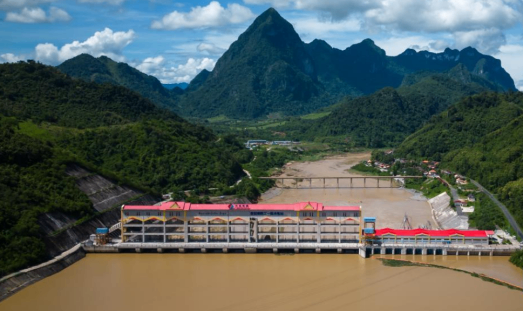
Exchange rate risk is a major challenge faced by all enterprises operating in Laos, characterized primarily by two key features: the long-term depreciation trend of the Kip and the widespread dollarization of the entire economy; these two factors create a vicious cycle. Over the past five years, the Kip has continued to weaken against the US dollar, experiencing multiple episodes of rapid depreciation; although it briefly stabilized in 2025 amid a tightening monetary policy, the underlying foundation for endogenous depreciation has not changed. Laos 'manufacturing sector remains weak, with a large proportion of consumer goods, fuels, and production equipment relying on imports, thereby sustaining rigid foreign currency demand; furthermore, Laos' export basket is narrow, generating foreign exchange earnings solely from hydropower, mineral resources, and agricultural products, resulting in a long-standing imbalance between foreign exchange supply and demand.
The local economy exhibits distinct dual-currency characteristics: while official authorities publish guiding exchange rates, commercial banks face tight foreign exchange conversion quotas, resulting in a long-standing price differential between the private market exchange rate and the official exchange rate. Enterprises therefore face dual losses: on one hand, their operating revenues from local projects are denominated in Kippen, and their continuous depreciation leads to a reduction in their book value; on the other hand, if an enterprise needs to convert its operating profits into foreign currency to remit it back to China, it must not only bear the exchange spread but may also encounter insufficient USD conversion quotas from the bank, rendering timely foreign exchange conversion impossible.
The high degree of US dollarization further amplifies these risks. The general public, merchants, and large-scale trading entities in Laos often default to US dollar pricing; for land leases, equipment procurement, and engineering contracting, US dollars are frequently used directly for settlement. For foreign-invested enterprises, if their revenues are denominated in Kip while their liabilities and costs are in US dollars, exchange rate fluctuations can directly lead to cash flow gaps. Even though China and Laos have recently advanced cross-border settlement using the digital RMB and established local currency swap agreements, RMB-based settlements primarily occur within large-scale B2B bulk trade transactions, making it difficult for ordinary small and medium-sized foreign trade or retail enterprises to adopt such arrangements on a large scale.
Practical implications: Enterprises should strive to specify the settlement currency in business contracts, prioritizing USD or RMB-denominated transactions; avoid holding large amounts of Qarawi cash for extended periods; plan the timing of profit outflows rationally, avoiding concentrated foreign exchange purchases at the end of the year; for long-term projects, enterprises may establish a currency matching structure between revenues and expenditures to mitigate currency mismatch risks; and should not rely solely on predicting exchange rate fluctuations to hedge against gains, but rather incorporate exchange loss calculations into their basic cost estimates.
III.Foreign Exchange Reserves: A fragile buffer mechanism that determines whether a company's profits can be smoothly remitted abroad
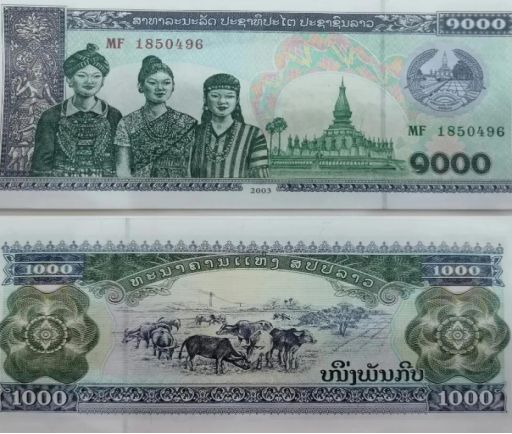
Foreign exchange reserves serve as an intuitive benchmark for measuring a country's capacity to accommodate foreign investment and safeguard its cross-border capital flows; they directly impact whether corporate profits and investment principal can be remitted in compliance with regulatory requirements. By 2026, Laos' foreign exchange reserves are expected to rebound to approximately US$4.3 billion, reaching a new interim high; however, this indicator must be analyzed through an objective breakdown. According to internationally accepted standards, foreign exchange reserves should at least cover three months of total imports to constitute a safe buffer. Currently, Laos' reserves barely touch the safety threshold; should international oil prices rise, hydroelectric export prices decline, or tourism revenue fluctuate, the reserve levels could drop rapidly.
It should also be noted that: the announced total reserve amount includes various currency swap lines and Special Drawing Rights (SDRs), while the net available foreign exchange reserves are lower than their book value. The Bank of Laos implements foreign exchange controls, requiring export revenues to be compulsorily repatriated domestically; commercial banks are subject to quota-based management for foreign currency sales, with priority given to importers of essential goods such as fuel and pharmaceuticals for foreign exchange procurement. Ordinary manufacturing enterprises and trade enterprises often face issues such as waiting lists and insufficient quota when purchasing foreign exchange.
Many investors overlook a key logical framework: external debt pressure, exchange rate trends, and foreign exchange reserves are interdependent. When external debt matures in concentrated batches → large amounts of US dollars are allocated to debt repayment → foreign exchange reserves are depleted → the foreign currency supply becomes tight → the domestic currency accelerates its depreciation. This transmission chain has already played out multiple times in Laos. When foreign exchange reserves are sufficient, cross-border fund flows among enterprises remain smooth; however, during periods when reserves face pressure, the difficulty of transferring funds under the capital account increases significantly.
For enterprises expanding overseas, evaluating foreign exchange reserves requires dynamic tracking, with particular focus on two key signals: fluctuations in global energy prices and changes in Laos' hydropower export revenues. For heavy-asset long-term investments, it is essential to anticipate extreme scenarios—such as how to respond if foreign exchange policies continue to tighten, thereby prolonging the profit-outflow cycle. Enterprises may prioritize establishing presence in China-Laos cooperation zones, such as Vientiane Sai Seta, leveraging the cross-border settlement channels available within these zones; they should also actively utilize China-Laos bilateral currency swap agreements and digital RMB cross-border settlement tools to reduce their reliance on the US dollar. Additionally, companies should implement robust capital planning, prioritizing the allocation of operating profits toward local reinvestment to mitigate short-term demand for foreign exchange purchases.
The three key indicators—external debt, exchange rate, and foreign exchange reserves—form the "Iron Triangle" of Laos' financial fundamentals; these three factors are interrelated and collectively determine the underlying risk level of overseas investments. Overall, Laos benefits from resource dividends, geographical advantages, and favorable investment promotion policies, possessing long-term investment value; however, the structural weaknesses within its financial system cannot be remedied in the short term. While the macroeconomic environment has shown some improvement in the short term—characterized by declining inflation, recovering foreign exchange reserves, and ongoing debt restructuring efforts—the three major risks—high external debt levels, depreciation pressure on the local currency, and vulnerability of foreign exchange reserves—continue to persist. Investors should not overlook the potential liquidity shocks hidden behind temporary signs of stability.
For different types of investors, differentiated risk management standards should be established: for large-scale projects involving cooperation with governments or state-owned enterprises—such as those in infrastructure and power sectors—focus should be placed on evaluating sovereign external debt and payment risks; for foreign trade and cross-border commerce enterprises, emphasis should be placed on controlling exchange rate fluctuations and the settlement currency; and for manufacturing enterprises planning to hold factory or industrial park assets for the long term, continuous monitoring of changes in foreign exchange reserves and advance planning of profit repatriation pathways are required.
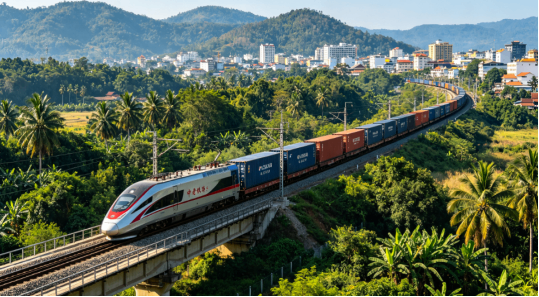
As China–Laos financial cooperation continues to deepen, bilateral currency swap agreements and cross-border settlement using the digital yuan have been progressively implemented, helping to mitigate, to some extent, the risks associated with reliance on the US dollar. However, these new settlement instruments serve as risk buffering mechanisms rather than providing a means to fundamentally eliminate the inherent macro-financial vulnerabilities of small economies. It is recommended that all enterprises intending to enter the Laos market incorporate the three major financial indicators into their routine monitoring list during the due diligence phase, allocate risk buffers for exchange rate fluctuations and potential delays in fund transfers when conducting investment projections, adopt a rational strategic approach, and achieve an optimal balance between risk and return.

 Home
Home  Message
  Phone
Phone