
As a flagship high-quality development project under the Belt and Road Initiative and a core hub of the Trans-Asian Railway Central Line, the financing plan for Phase II of the Thailand-China Railway, covering the Korat-Khon Kaen-Nong Khai section, has been officially approved by the Thai Cabinet, with joint credit granted by Chinese policy banks officially in place. The financing approval has completely resolved the long-term funding bottleneck of the project and officially kicked off the substantive construction phase. The most notable change is that the proportion of RMB loans for Phase II has increased substantially, becoming the primary core source of project funds. This transformation breaks the long-standing pattern whereby large-scale cross-border infrastructure projects in Southeast Asia rely heavily on US dollar financing and external capital dominance in regional financial affairs, laying a solid practical foundation for de-dollarization in regional economic and trade cooperation and the deepening of RMB internationalization in ASEAN. According to the coordinated construction plan jointly formulated by the two countries, Phase II of the Thailand-China Railway will start full-scale construction in 2026 and be completed and opened to traffic in 2031. Serving as both a key backbone corridor for land connectivity between China and Thailand and a vital bond for the in-depth integration of industrial and supply chains on the Indochina Peninsula, the project carries important practical significance and far-reaching strategic value for mutually beneficial cooperation between China and Thailand and coordinated prosperity within the China-ASEAN region.
I. Clear Overall Construction Layout of the Thailand-China Railway and Prominent Core Status of Phase II
(1) High-standard Project Construction with Comprehensive Transportation and Regional Driving Functions
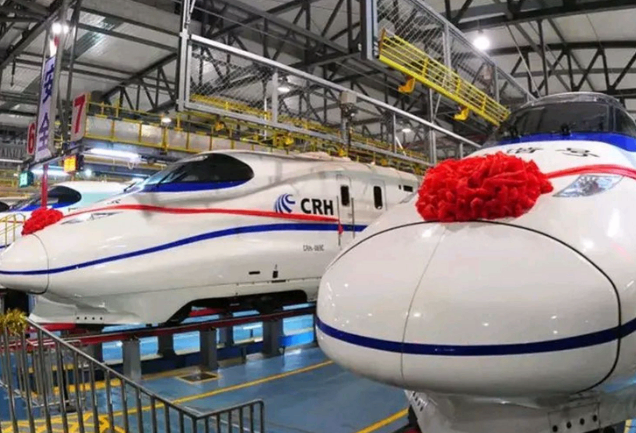
The Thailand-China Railway is a major national strategic infrastructure project between China and Thailand, with a total planned mileage of approximately 609 kilometers. Constructed in accordance with the high-standard double-track electrified high-speed railway specifications and designed for an operating speed of 250 kilometers per hour, the railway is positioned as a comprehensive passenger and freight trunk line, different from ordinary passenger-only high-speed railways, to meet diverse cross-border circulation needs. For passenger transport, it facilitates cross-border business exchanges, tourism travel and daily commuting between China and Thailand. For freight transport, it supports the transportation of industrial manufactured goods, tropical agricultural products, commercial materials and large cross-border bulk cargoes, featuring high comprehensive adaptability and practical value. Running longitudinally through the hinterland of Thailand, the route connects Nong Khai, a national-level border port between Thailand and Laos in the north, with Bangkok, Thailand’s core economic circle in the south, passing through major economic towns in northeastern Thailand such as Korat and Khon Kaen. It is fully equipped with modern railway stations, high-speed rail traction power supply systems, intelligent signal dispatching systems, cross-border one-stop customs inspection facilities, as well as supporting ecological protection and municipal connection projects. Upon completion, the project will thoroughly address Thailand’s shortcomings in high-standard trunk railway construction, solve long-term development problems including weak transportation infrastructure in northeastern Thailand, unbalanced regional development and high cross-border logistics costs, consolidate a solid transportation foundation for Thailand’s balanced national development, and build a fast land-based opening corridor directly connecting China’s southwest region with the Indochina Peninsula.
(2) Phased Construction in Progress and Phase II Serving as the Key Closed Link for Cross-border Connectivity
To reasonably share construction pressure and steadily advance project implementation, the Thailand-China Railway is divided into two phases for planned phased construction and phased operation. Phase I, the Bangkok-Korat section, started construction in 2017. Affected by cumbersome land acquisition and demolition procedures in Thailand, difficulties in coordinating historical and cultural heritage protection areas, diverse resettlement demands of local residents and insufficient coordination between municipal supporting facilities and railway construction, the construction progress has long been slower than expected. By the end of 2025, nearly half of the civil engineering construction of Phase I has been completed, with subsequent works such as track laying, station pouring and electromechanical equipment commissioning steadily advancing, and it is expected to be completed and put into initial operation in 2028. Phase II, the 357.12-kilometer Korat-Nong Khai section, is the core throat section connecting the Thailand-China Railway with the China-Laos Railway and realizing seamless interconnection of railway networks among China, Laos and Thailand, as well as a crucial closed-loop project for the full opening of the Trans-Asian Railway Central Line. Before the financing approval, Phase II had completed all statutory pre-construction procedures including geological survey, construction design, environmental impact assessment, land pre-approval and operation connection planning, with all preliminary preparations fully completed. The only factor delaying construction was financing negotiations. With the financing plan finalized, all construction bottlenecks have been eliminated, and the project has officially entered the stage of large-scale construction. After opening to traffic, cross-border travel time will be greatly shortened, logistics efficiency will be significantly improved, and bilateral economic and trade development will be strongly boosted.

II. Diversified Financing Plan for Phase II Finalized, with RMB Loans as the Core Mainstay
(1) Financing Adapted to Thailand’s Fiscal Situation with a Diversified Portfolio Ensuring Risk Control
The total investment of Phase II of the Thailand-China Railway is equivalent to about 72.5 billion RMB. Given its large construction scale, long cycle and intensive capital investment, relying solely on Thai government fiscal investment is unsustainable and would bring huge short-term fiscal pressure and rising debt risks. To balance project construction needs and Thailand’s fiscal affordability, China and Thailand have finalized a mutually beneficial and risk-controlled diversified composite financing plan through multiple high-level exchanges, special financial consultations, debt risk assessments and repayment schedule optimization. Different from Phase I, which relied mainly on Thai self-financing with China only providing technical and equipment support, the financing structure of Phase II has been fundamentally optimized. The core highlight is the substantial increase in the proportion of RMB loans, replacing traditional financing methods as the largest source of project funds. The complete financing structure features clear division of labor and special funds for dedicated purposes, balancing public welfare construction and market-oriented operation needs. It not only ensures the steady progress of basic work such as land acquisition and construction, but also reserves sufficient financial support for later railway operation and maintenance and supporting development, ensuring the stable advancement of the whole construction process and preventing practical risks such as fund shortage and misappropriation.
(2) Scientific Capital Allocation with All Parties’ Funds Performing Precise Functions
The three core funding sources of Phase II adopt a clear proportion structure with well-defined roles to meet the needs of different construction and operation links. First, special Thai government fiscal appropriations account for 22.3% of the total investment, included in Thailand’s annual national fiscal budget and specially used for land acquisition and demolition, resident resettlement compensation, completion of preliminary procedures and basic station supporting construction, eliminating construction obstacles such as land acquisition disputes and ensuring a stable construction environment. Second, long-term preferential RMB loans jointly provided by China’s two major policy banks account for 60% of the total investment, with interest rates much lower than international commercial loans, a loan term of 35 years and a 10-year grace period. Repayment will start only after the railway generates stable operating income, greatly reducing Thailand’s short-term debt repayment pressure and avoiding high-interest external debt risks. Third, local Thai commercial bank loans and PPP social capital financing account for a combined 17.7%, mainly used for later railway operation and maintenance, supporting commercial development along the line and cross-border logistics services, realizing positive interaction between government fiscal investment and market-oriented social capital and improving the long-term operation vitality of the project.
(3) Innovative RMB Financing Model to Avoid Exchange Rate Risks and Achieve Win-win Cooperation
The RMB credit cooperation adopts an innovative model of RMB-denominated pricing, cross-border settlement and RMB repayment, completely breaking away from the long-term reliance on US dollar settlement in cross-border infrastructure and effectively resisting exchange losses and international financial market fluctuations caused by US dollar volatility. Both countries have agreed that Thailand can repay part of the loan principal and interest by exporting advantageous local commodities such as rubber, tropical fruits and mineral resources to China. This move not only helps Thailand stabilize export trade, digest domestic production capacity and boost economic income, but also enriches China’s supply of high-quality consumer goods, realizing in-depth integration of financial cooperation and bilateral trade. Chinese banks provide supporting closed-loop cross-border fund supervision services to monitor capital flows in real time, ensuring all funds are exclusively used for project construction, safeguarding fund security and forming a benchmark model for future RMB financing of cross-border infrastructure projects between China, Thailand and ASEAN.

III. Profound Reasons for Rising RMB Financing Proportion and Far-reaching Strategic Significance of the Project
(1) Solid Bilateral Economic and Trade Foundation and Chinese Financing Meeting Thailand’s Development Needs
RMB loans becoming the main financing source for Phase II is an inevitable result of deepened China-Thailand economic and trade cooperation and overlapping practical development needs. On the one hand, China has long been Thailand’s largest trading partner, with highly complementary bilateral trade and frequent investment exchanges. The demand for cross-border RMB settlement and investment and financing between enterprises of the two countries continues to rise, laying a solid market foundation for the large-scale application of RMB infrastructure financing with high recognition and strong adaptability. On the other hand, China’s overseas infrastructure investment and financing system is mature and well-developed. Policy banks have rich experience in cross-border credit business, risk management, interest rate pricing and coordination. With long-term stable RMB currency value, few additional loan conditions and flexible repayment arrangements, China’s RMB financing model is far more favorable than external capital loans with high interest rates, strict clauses and short terms. Supported by China’s high-speed rail core technology, equipment supply and operation experience, China’s low-cost and long-term RMB financing perfectly meets Thailand’s urgent infrastructure upgrading needs amid fiscal constraints, making it the optimal choice for Thailand to promote the project.
(2) Empowering Regional Connectivity and Driving Coordinated Economic Development between China and Thailand
The financing approval and project advancement will inject strong momentum into the economic development of both China and Thailand. During construction, the project will create a large number of jobs and drive the vigorous development of upstream and downstream industries such as building materials, engineering machinery and logistics transportation along the line, unleashing the economic potential of northeastern Thailand and narrowing the north-south regional development gap. After operation, the core section of the Trans-Asian Railway Central Line will be fully completed, thoroughly opening the land passage between southwest China and the Indochina Peninsula, greatly improving the efficiency of personnel exchanges, cargo transportation and industrial cooperation, and promoting the in-depth integration of industrial, supply and value chains between China and ASEAN. Meanwhile, the project drives the export of China’s complete high-speed rail industrial chain, forming a virtuous cycle of integrated development of financing, construction and industrial export, consolidating the foundation of long-term friendly and practical cooperation between the two countries and elevating bilateral economic and trade cooperation to a new stage of high-quality development.
(3) Boosting RMB Internationalization in ASEAN and Stabilizing the Regional Financial Security Pattern
As a flagship high-speed rail project with large-scale RMB financing in ASEAN, Thailand-China Railway Phase II has strong demonstration effects and far-reaching strategic financial significance. The large-scale use of RMB investment, financing and settlement will continuously increase the proportion of RMB in ASEAN infrastructure, trade and cross-border capital flows, gradually break the long-term US dollar dominance in regional cross-border financing, promote the diversification of the regional monetary system, reduce the reliance of Indochina countries on the US dollar, mitigate the impact of international financial fluctuations on regional economy and strengthen regional financial security. Relying on the benchmark effect of this project, RMB internationalization will be further deepened in ASEAN, and the de-dollarization process of regional economic and trade and financial cooperation will be accelerated. Although subsequent construction still faces minor challenges such as land acquisition coordination and external geopolitical fluctuations, the overall development trend is positive. With the steady construction and operation of the project, the Indochina Economic Corridor will take shape rapidly, and the vision of common prosperity and coordinated development between China and ASEAN will be steadily realized.

 Home
Home  Message
  Phone
Phone