
On March 9, 2026, Malaysia officially launched the Capital Market Masterplan 2026–2030 (CMP). As a strategic plan based on Malaysia’s 20-year long-term vision and implemented in a 5-year cycle, its core goal is to grow the size of the capital market from 4.3 trillion Ringgit in 2025 to 5.8-6.3 trillion Ringgit by 2030. Meanwhile, it anchors on two core directions: becoming an ASEAN regional hub and a green finance benchmark, to build a more dynamic, inclusive and sustainable capital market ecosystem. Developed under the auspices of the Securities Commission Malaysia (SC), Prime Minister Anwar Ibrahim emphasized that its core is to make the capital market a key driver of national economic transformation, accurately align with the ASEAN integration process and global carbon neutrality goals, and achieve efficient capital allocation and shared social development.

I. Core Positioning and Top-Level Design of the Masterplan
ⅰ Strategic Vision and Core Themes
With "Reshape and Recalibrate" as its core tone, the CMP has established four interrelated strategic outcome themes, forming a complete development framework:
Vibrant Market: Focus on expanding market scale and optimizing structure. By improving equity market valuation, enhancing the value of bonds/Sukuk, accelerating the development of venture capital (VC)/private equity (PE), and improving the supervision of private credit and alternative assets, build a multi-level market system with "more products, more participants and more transactions".
Inclusive Market: With "universal accessibility" as the goal, expand channels for retail investor participation, improve financing paths for micro, small and medium enterprises (MSMEs) and medium-sized enterprises, and reduce investment thresholds and enhance the asset allocation capacity of the general public through digital tools and financial education.
Sustainable Market: Closely align with national carbon neutrality goals, build a green finance ecosystem, and plan to mobilize a total of 90-100 billion Ringgit by 2030 to invest in projects with measurable environmental and social benefits, becoming an important practice position for global green finance.
Regional Gateway Market: Seize the opportunity of ASEAN Community construction, position Malaysia as the ASEAN financing and investment center, attract cross-border listings and asset allocation, target 100-110 billion Ringgit of foreign underlying assets by 2030, and create a benchmark for ASEAN characteristic innovative products.
ⅱ Implementation Foundation and Guarantee System
The CMP is supported by regulatory and governance excellence at the bottom. Relying on Malaysia’s global leading position in Islamic finance (Islamic financial assets are about 682 billion US dollars, ranking third in the world, and Islamic securities account for 63% of the total debt), it takes "Maqasid al-Shariah (Islamic legal objectives)" as the differentiated core, and strengthens regulatory coordination and industry self-discipline. At the same time, through data-driven supervision, technology-enabled intermediary services and talent training system construction, it ensures the flexibility and effectiveness of strategic implementation to respond to the rapid changes in the global market.
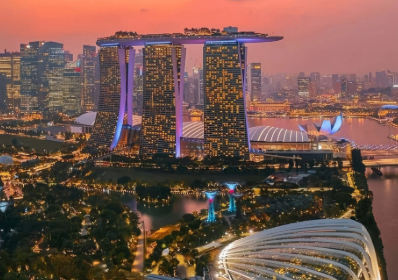
II. Focus on ASEAN: Building a Regional Capital Hub
2.1 Core Measures for Regional Integration
2.1.1 Facilitation of Cross-Border Financing and Listing
Digitally upgrade the IPO and listing process, shorten the approval cycle and reduce issuance costs to attract high-quality ASEAN enterprises to list in Malaysia, with a focus on supporting local "regional leading enterprises" to expand their ASEAN businesses through MyABE certification. Build a unified ASEAN regulatory path, align with the ASEAN Capital Markets Forum (ACMF) Action Plan 2026-2030, promote the coordination of cross-border investment, clearing and settlement, and investor protection rules, and reduce barriers to regional capital flows. Develop ASEAN characteristic products, including ASEAN infrastructure Sukuk, halal industry funds, and thematic Exchange-Traded Funds (ETFs), to create a "toolbox" for regional capital allocation.
2.1.2 Regional Asset and Capital Agglomeration
Target 100-110 billion Ringgit of foreign underlying assets by 2030, attracting ASEAN and global institutional investors to take Malaysia as a regional investment gateway. Rely on Bursa Malaysia to improve the multi-level market system, promote the interconnection of ASEAN indices, and enhance the liquidity and visibility of regional assets. Strengthen cooperation with ASEAN development institutions, and jointly launch regional sustainable development financing plans with the Asian Development Bank (ADB), ASEAN Infrastructure Fund (AIF), etc., to support key areas such as ASEAN infrastructure and green energy projects.
2.2 Key Areas of ASEAN Cooperation
In the field of ASEAN infrastructure financing, Malaysia will launch ASEAN infrastructure Sukuk and public-private partnership (PPP) securitization products to reduce the financing costs of infrastructure projects, attract regional capital to participate in the construction of infrastructure in various ASEAN countries, and help upgrade regional connectivity. In terms of cross-border development of small and medium-sized enterprises, an ASEAN SME financing guarantee mechanism will be established to open up cross-border equity financing channels, provide financial support for Malaysian SMEs to expand into the ASEAN market, and promote the large-scale and international development of SMEs. In the field of Islamic finance coordination, Malaysia will work with other ASEAN countries to build unified ASEAN Islamic finance standards, promote the issuance of cross-border Sukuk, further consolidate Malaysia’s central position in ASEAN Islamic finance, and give play to its advantages in Islamic financial product innovation and supervision. In terms of regional carbon market linkage, it will actively connect with the ASEAN carbon trading system, explore the path of cross-border carbon credit securitization, and gradually build an ASEAN carbon pricing and trading hub to help the ASEAN region achieve carbon neutrality goals.
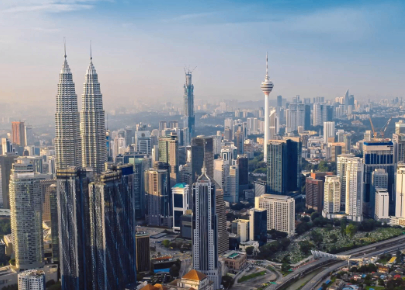
III. Deep Dive into Green Finance: Building a Sustainable Development Ecosystem
3.1 Core Goals and Quantitative Indicators of Green Finance
The CMP takes green finance as the core carrier of national sustainable development goals and sets clear quantitative targets: mobilize a total of 90-100 billion Ringgit by 2030 to invest in green, social and sustainable development (ESG) projects, covering renewable energy, energy conservation and carbon reduction, climate resilience, social livelihood and other fields. Build a sound green finance infrastructure, including a unified sustainable development classification standard, carbon market system, and third-party certification and audit mechanism, to eliminate the risk of "greenwashing". Promote the standardization of ESG information disclosure by financial institutions and enterprises, improve market transparency, and guide capital to concentrate in sustainable areas.
3.2 Innovative Green Finance Tools and Practice Paths
3.2.1 Diversified Green Financing Tools
Relying on Malaysia’s advantages in Islamic finance, launch Sustainability-linked Sukuk, linked to goals such as carbon reduction and renewable energy, expand the issuance scale and investor base, and achieve in-depth integration of Islamic finance and green development. Focus on social fields such as education, medical care and poverty alleviation, launch Impact Bonds, and attract private capital participation through the "pay-for-results" model to achieve a win-win situation of social benefits and financial returns. Develop Catastrophe Bonds in response to climate disasters such as typhoons and floods in ASEAN, enhance the regional climate resilience financing capacity, and help relevant countries and regions cope with economic losses caused by climate disasters. Adopt a Blended Finance structure, combining public funds, preferential financing and private investment, reduce the risks of green projects through guarantees and first-loss mechanisms, and leverage more social capital to participate in the development of the green industry.
3.2.2 Green Finance Infrastructure Construction
Rely on Bursa Carbon Exchange to accelerate the construction of a voluntary carbon market ecosystem, improve the carbon credit certification, trading and pricing mechanisms, explore the path of carbon asset securitization, and enhance the liquidity and value of carbon assets. Align with the ASEAN Sustainable Finance Taxonomy, formulate a localized sustainable development classification standard for Malaysia, clarify the boundary of green project identification, unify project evaluation and disclosure standards, and ensure the scientificity and consistency of green project identification. Cultivate local ESG rating, third-party certification and audit institutions, establish a sustainable project evaluation, monitoring and verification system, improve the credibility of green assets, and prevent "greenwashing" behaviors. Issue green investment guidelines to guide long-term institutional funds such as pension funds and insurance funds to increase the allocation of green assets, and build a diversified group of green investors to provide stable financial support for the development of green finance.
3.3 Key Implementation Scenarios of Green Finance
In the field of renewable energy, focus on supporting the financing of solar energy, wind energy, biomass energy and other projects, promote the securitization of green power assets, help Malaysia’s energy transition, reduce dependence on traditional fossil energy, and increase the proportion of renewable energy in the energy structure. In the field of energy conservation and carbon reduction, provide diversified financing support such as bonds and equity for industrial energy conservation, green building renovation, green transportation and other projects, promote various industries to reduce carbon emissions, and realize industrial green upgrading. In the field of climate resilience, invest funds in coastal protection, water resource management, climate-smart agriculture and other fields, and enhance regional risk resistance capacity through tools such as Catastrophe Bonds and climate insurance-linked securities to cope with various challenges brought by climate change. In the field of social sustainability, support inclusive finance, affordable housing, rural revitalization and other projects through social bonds, balance environmental and social benefits, achieve the dual value of "green + social", and promote balanced social development.

IV. Supporting System: Ensuring Strategic Implementation
4.1 Regulatory and Policy Coordination
Improve the green finance regulatory framework, issue mandatory ESG information disclosure requirements, clarify the ESG disclosure standards and frequency for listed companies and financial institutions, and improve market information transparency. Introduce tax incentives and preferential policies, provide tax reductions for green bond issuance and green investment returns, reduce the financing costs of green projects, and enhance the enthusiasm of market entities to participate in green finance. Strengthen cross-border regulatory cooperation, establish information sharing and law enforcement cooperation mechanisms with regulatory authorities of various ASEAN countries, prevent cross-border green finance risks, and ensure the stable development of the regional capital market.
4.2 Cultivation of Market Entities
Promote banks, securities companies and insurance companies to set up green finance departments, develop green credit, green insurance and green investment banking products, improve the green finance service capacity of financial institutions, and meet the financing needs of different green projects. Guide enterprises to carry out ESG transformation, support green enterprises to list and raise funds, cultivate a number of green leading enterprises, give play to the demonstration and leading role of leading enterprises, and promote the large-scale development of the green industry. Cultivate ESG rating, certification, audit and consulting institutions, improve the green finance service industrial chain, and provide comprehensive green finance service support for market entities.
4.3 Talent and Technology Empowerment
Establish a professional talent training system for green finance and the ASEAN regional capital market, carry out targeted training in conjunction with universities, industry associations and financial institutions, focus on cultivating compound talents with financial knowledge, ASEAN regional knowledge and green development concepts, and solve the talent shortage problem. Promote the in-depth integration of financial technology and the capital market, use big data, artificial intelligence, blockchain and other technologies to optimize the evaluation, risk control and transaction settlement processes of green projects, and improve the operational efficiency of the capital market. Build a digital information platform, integrate green project information, ESG data and regional capital market dynamics, and provide accurate information services for investors, enterprises and regulatory authorities to help the implementation of the strategy.

V. Challenges and Outlook
5.1 Main Challenges
At present, the development of Malaysia’s capital market still faces multiple challenges: first, there are differences in regulatory rules and market environments among ASEAN countries, there are still barriers to cross-border capital flow and cooperation, and the promotion of regional integration is difficult; second, there is a risk of "greenwashing" in the field of green finance, the standardization of ESG information disclosure still needs to be improved, and the third-party certification system is not yet perfect; third, green projects have a long investment cycle and slow return, some investors have low participation enthusiasm, and the proportion of long-term capital allocation needs to be increased; fourth, there is a shortage of compound professional talents, which is difficult to meet the dual needs of ASEAN regional cooperation and green finance development.
5.2 Future Development Outlook
Despite many challenges, the implementation of the Capital Market Masterplan 2026-2030 will still inject strong momentum into the development of Malaysia’s capital market. With the continuous advancement of ASEAN integration, Malaysia, relying on its geographical advantages, Islamic finance characteristics and improved capital market infrastructure, is expected to gradually become the core hub of capital agglomeration in the ASEAN region, attracting more cross-border capital and high-quality enterprises to settle in. In the field of green finance, with the implementation of various policies and the improvement of infrastructure, Malaysia will gradually build a mature green finance ecosystem, realize the in-depth integration of the capital market and sustainable development, and provide "Malaysian experience" for the development of global green finance.
In general, the implementation of the masterplan will promote the qualitative improvement and quantitative growth of Malaysia’s capital market. It will not only help Malaysia’s economic transformation and sustainable development, but also make important contributions to the integration of the ASEAN regional capital market and the development of global green finance, and ultimately achieve the strategic vision of "Reshaping the Capital Market, Empowering Regional Development, and Leading the Green Future".

 Home
Home  Message
  Phone
Phone