
As the largest economy in Southeast Asia, Indonesia possesses the world's fifth-largest total water resources (approximately 3.9 trillion cubic meters). However, constrained by factors such as geographical distribution, urbanization process and technological level, the water industry presents distinct characteristics of "coexistence of abundant resources and insufficient supply, and imbalance between strong demand and weak facilities". Since 2025, driven by policy dividends, capital inflows and technological iteration, Indonesia's water market has accelerated its transformation from "addressing shortcomings" to "pursuing high quality", becoming one of the most potential golden tracks in the region. Based on authoritative data and industry practices, this report conducts an in-depth analysis of the current situation, core trends and investment opportunities of Indonesia's water industry, providing references for market participants.

I. Current Situation: Expanding Scale and Prominent Supply-Demand Contradictions
(I) Steady Growth in Market Scale and Solid Regional Leading Position
The Southeast Asian water market maintains a steady development momentum overall. In 2025, the market scale stabilized at around 15 billion US dollars, of which Indonesia accounted for over 85% with a scale of 12.75 billion US dollars, becoming the core growth engine of the region. Data from the International Water Management Institute (IWMI) shows that the compound annual growth rate (CAGR) of Indonesia's water market will remain at a high level of 8.5% from 2025 to 2030. Among them, the public utility water treatment sector performs prominently, with a scale of 5.32 billion US dollars in 2025. It is expected to achieve a CAGR of 8.2% from 2025 to 2031 and exceed 84.6 billion US dollars by 2031. In the segmented fields, the industrial water treatment market grows at a remarkable rate, accounting for 25% of the total market with an annual growth rate of over 10%, mainly benefiting from the rapid expansion of industries such as food and beverage, and electronic manufacturing.
(II) Prominent Supply-Demand Imbalance and Significant Regional Differences
Despite abundant total water resources, there is a huge gap between Indonesia's water supply capacity and growing demand. According to the United Nations' "2025 Global Water Security Report", more than 100 million people in Indonesia still cannot access safe drinking water in 2025, and only 7% of the country's wastewater is properly treated. The supply-demand contradiction in Jakarta, the capital, is the most acute. The current water demand reaches 30,000 liters per second, while the actual available water volume is less than 20,000 liters per second. Moreover, the demand is increasing at an annual rate of 3.3%, and the gap is expected to widen to 22,000 liters per second by 2028.
Uneven regional distribution further exacerbates the supply-demand contradiction. Java Island bears more than 60% of the country's population but only accounts for 10% of the national water resources. Conflicts between agricultural irrigation and urban domestic water use occur frequently during the dry season. In contrast, islands such as Sumatra and Kalimantan are rich in water resources but have a low development level. The problems in rural and outer island areas are more severe. Most of these areas rely on scattered water sources and simple facilities, making it difficult to guarantee water quality and supply stability, forming a sharp gap with urban areas.
(III) Dual-Drive of Policy and Capital, Accelerated Infrastructure Implementation
The Indonesian government has listed the water industry as a national priority development area. The "National Water Development Plan (2021-2045)" clearly puts forward the goals of achieving full coverage of clean water and reducing untreated wastewater discharge by 50% by 2030. To promote the achievement of these goals, the government plans to invest 10 billion US dollars in water resources infrastructure construction by 2025. By 2025, more than 3 billion US dollars has been implemented, with the start of construction of 110 clean water centers, 140 water supply wells and over 2,000 water source points. Jakarta has simultaneously launched a plan to build 12 reservoirs.
The capital side presents a diversified pattern, with the Public-Private Partnership (PPP) model becoming the mainstream. International giants such as Veolia and Suez participate in project operations through joint ventures, while local enterprises focus on the small and medium-sized city market. International organizations such as the Asian Development Bank provide financial support through bidding to empower infrastructure projects such as urban inclusive sanitation projects. In 2025, Indonesia launched the construction of 15 reservoirs with a total investment of 47.84 trillion Indonesian rupiahs, which are expected to be fully completed by 2029, forming a pattern of "one island, one reservoir and multi-region joint supply".
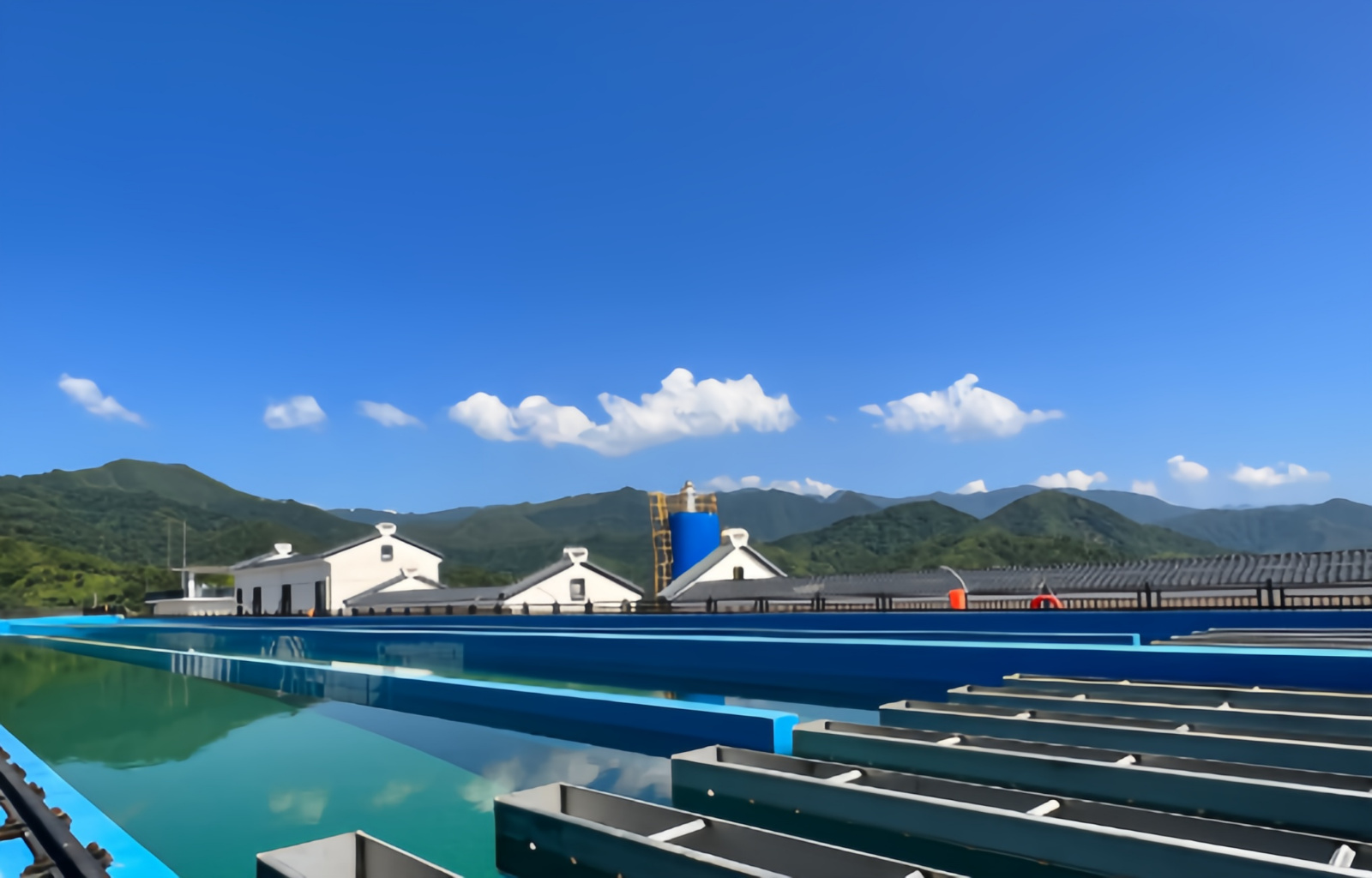
II. Core Trends: Parallel Development of Technological Upgrade and Scenario-Based Innovation
(I) Accelerated Digital Transformation, Intelligent Management Becoming Mainstream
Indonesia's water industry is transforming from "infrastructure construction" to "efficient intelligence", with the wide application of the Internet of Things (IoT) and artificial intelligence (AI) technologies in the entire process of water supply management. Jakarta has piloted wireless smart water meters based on LoRaWAN technology, covering 49,000 households. These meters realize functions such as real-time water consumption reading and water pipe leakage monitoring, increasing the maintenance response speed by 30%, effectively eliminating manual meter reading errors and privacy interference, and will be promoted across the city in the future. In addition, intelligent water quality monitoring systems significantly improve water supply management efficiency by real-time tracking of water pressure and water quality parameters, becoming a standard configuration for water operation in large cities.
(II) Technological Routes Adapting to Local Needs, Green and Low-Carbon Becoming the Direction
In response to the needs of different scenarios, Indonesia's water technologies show a trend of differentiated iteration. Due to limited land in urban core areas, technologies such as Membrane Bioreactor (MBR) with small footprint and excellent effluent quality have become the mainstream. Ecologically sensitive areas prefer low-energy-consuming ecological treatment technologies such as constructed wetlands. For outer islands and remote areas, modular seawater desalination equipment is promoted. The "wind-solar complementary island energy-saving seawater desalination demonstration project" supported by China has been successfully accepted, with an annual output of 175,000 tons of pure water to meet the needs of 3,000 people. The modular design can be quickly adapted to different islands.
Green materials and circular concepts are simultaneously upgraded. Corrosion-resistant water storage materials such as stainless steel and glass fiber reinforced plastic have become the first choice for civil water storage equipment due to their adaptability to tropical climates and coastal salt spray environments. Resource recycling technologies such as reclaimed water reuse and phosphorus recovery are increasingly applied in the industrial sector, complying with environmental policy requirements and long-term operation cost optimization needs.
(III) Explosive Demand in Segmented Scenarios, Emergence of Layered Market Pattern
With the maturity of the market, Indonesia's water demand presents scenario-based and layered characteristics. On the urban side, the demand for constant pressure water supply equipment in high-rise residential buildings and commercial complexes is growing, and the demand for the renovation of water supply systems in old communities is urgent. In tourist resorts such as Bali, the combined solution of modular glass fiber reinforced plastic water tanks and portable septic tanks has become a standard configuration for hotel clusters and scenic spots, balancing water supply guarantee and environmental protection needs. On the industrial side, the supporting demand for water purification equipment, water pumps and water storage tanks continues to surge with the upgrading of the manufacturing industry, and the demand for wastewater treatment compliance renovation in industries such as food and chemical industry is strong. On the rural and outer island side, small water storage facilities with strong weather resistance and easy installation have become rigid demands, and locally adapted products have quickly covered dozens of cities.
III. Challenges and Opportunities: Market Space Amid Overcoming Shortcomings
(I) Core Challenges in Industry Development
Despite huge potential, Indonesia's water industry still faces multiple bottlenecks. Firstly, the infrastructure gap is large, and administrative efficiency restricts project implementation. The approval cycle for projects initiated by enterprises alone ranges from 3 to 12 months. In addition, the financial investment from the central and local governments is limited. To achieve the 2025 clean water coverage target, at least 4.5 billion US dollars of investment is needed in the next 10 years, resulting in concentrated investment pressure. Secondly, regional development is uneven. Most resources are concentrated in core areas such as Java Island, while the facility coverage rate in outer islands and rural areas is almost zero. Insufficient law enforcement leads to frequent illegal discharge and leakage by small and medium-sized enterprises. Thirdly, there are shortcomings in technology and talents. Local enterprises' competitiveness is concentrated in small and medium-sized projects, relying on imports in the high-end equipment field. The shortage of professional operation and maintenance talents affects the long-term stable operation of facilities.
(II) Future Investment and Development Opportunities
In the short term, addressing infrastructure shortcomings remains the core opportunity. The demand for projects such as cross-regional water supply pipelines, wastewater treatment plant upgrades, and water storage facility construction in drought-prone areas is clear, and the PPP model will continue to attract capital. Indonesia's water market scale is expected to exceed 14 billion US dollars in 2026, with the urban water supply and wastewater treatment sector maintaining a dominant share of 65%, and the industrial water treatment market is expected to exceed 3.5 billion US dollars.
In the medium term, there is broad space for technological localization and international cooperation. Chinese enterprises have significant technological and cost advantages in fields such as water storage equipment and water treatment projects, and can expand the market through technology export, joint ventures and cooperation. Financial support from international organizations such as the Asian Development Bank will continue to increase, and water technology cooperation between Indonesia, China and Singapore is expected to deepen. In the long term, a closed-loop ecology of "treatment + recycling + reuse" will gradually form, and the application ratio of reclaimed water in irrigation, industrial cooling and other fields will increase significantly, providing broad space for full-chain service enterprises.

IV. Conclusion
Since 2025, Indonesia's water industry has accelerated its transformation amid pain points and opportunities. Behind the supply-demand gap lies a hundred-billion-level market space, and policy promotion and technological innovation point out the direction for industry development. In 2026 and beyond, with the implementation of infrastructure, popularization of technology and in-depth capital investment, the industry will shift from "passively addressing shortcomings" to "proactively building a sustainable water ecology". For market participants, focusing on local needs, strengthening technological localization adaptation, and linking with policy orientations and PPP projects will be the key to seizing the market. In the process of advancing Indonesia's water security strategy, high-quality products and full-chain services will continue to create value, helping to solve the water resource dilemma while achieving their own business growth and jointly building the cornerstone of regional sustainable development.

 Home
Home  Message
  Phone
Phone